About us
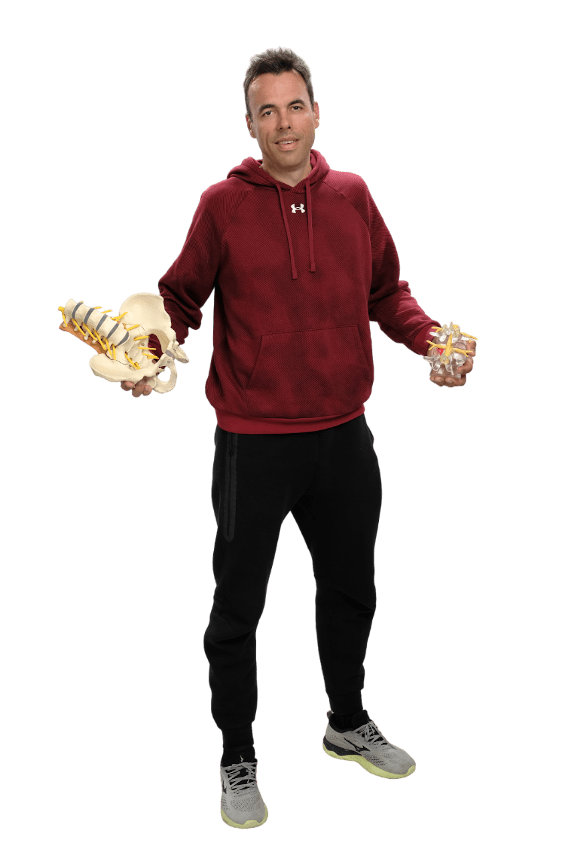
One day in the lobby of our Faculty of Education - University of Primorska, Dr. Andrej Kocjan was thinking about how he could attract people to exercise regularly.
Inspired by several well-known coaches and researchers, he and a group of programmers created a science – based workout program.
Andrej is a professor of physical education.
In his early years he competed in windsurfing and regular physical activity is an essential part of his life.
After completing his PhD at the University of Primorska, he became a teacher at the same university.
He works as a fitness coach of tennis players and sailors.
His research activity is focused on how exercise affects trunk stability.
DONATE
We are passionate about providing high-quality, scientifically based workout programs to help you achieve your health and fitness goals. All the content on our website is completely free for you to access. If you find value in our content, we would be grateful for any donation you can make to help us continue our mission – promoting regular physical activity!
Exclusive Rewards for Donors
As a thank you for your support, we offer the following rewards for our generous donors:
1. Top 3 Donors: Special Reward Just for You!
As a thank you for your incredible support, the top three donors of the month will receive an exclusive 30-minute one-on-one online meeting with me.
During this personalized session, we'll dive into your individual fitness goals, create a tailored action plan, and strategize the best steps to help you achieve your objectives.
This is a unique opportunity to get expert guidance and personalized advice to take your fitness journey to the next level!
2. Special Thank You
Every donor will be acknowledged with a big thank you on our Facebook page (first name only), as a token of our appreciation for helping us continue our mission.
Why Donate?
Server Costs and Maintenance:
To ensure our platform is fast, secure, and always accessible to you,
we need funds to cover the expenses of hosting and maintaining our website and training programs.
Expanding Access to Knowledge:
We believe that fitness and wellness should be accessible to everyone. Donations will help us extend our educational resources into schools, community centres, and underserved areas, where fitness education is often limited.
THANK YOU FOR BEING PART OF OUR COMMUNITY – YOUR GENEROSITY MAKES ALL THE DIFFERENCE!
Contact
Andrej Kocjan, PhD
Faculty of Education,
University of Primorska, Slovenia
email: keeponmovingapp@gmail.com
Instructions
If you read this text, you are one step closer to feeling better. The ideal execution of online exercises is not an easy task. Writing a 100% effective training program without evaluating the trainee is almost impossible. Despite this fact, exercises in this workout program are science based and effective if performed in a proper way. Before you start practicing, please read the recommendations below.
Before starting any exercise you should warm up. A warm up increases your body temperature and improves muscle elasticity, which reduces the risk of injury.
Try to warm up for at least 5 minutes.
After any workout you should cool down.
Try to relax and stretch some important muscle groups. Training plans include 8 levels of progression. A level is appropriately chosen when you feel an effort (after finishing the entire workout) that you subjectively evaluate as about 70% of your maximum.
Exercising at this level sometimes feels breathless and more difficult to carry on a conversation. After finishing a workout, you should not feel exhausted. If your effort is significantly lower (<60%), choose a more difficult level. If your effort is significantly higher (>80%) and you have difficulties to say more than 4 words in a row and cannot perform the exercises correctly, choose an easier level.
Do not push the limits. Listen to your body. This is especially true for beginners.
Likewise, do not perform any exercises in case of acute pain.
You should not feel pain while performing any type of exercise.
Practice slowly, without jerky movements.
During exercising breath normally and do not hold your breath.
Do not forget to hydrate.
While exercising, maintain the mechanism to increase spine stability that you learnt in “theory” section.
If you feel discomfort during some movements or exercises, omit certain ones ( shorten the holding duration or reduce the number of repetitions ).
Do not sacrifice good exercise technique to accomplish more repetitions.
Avoid exercising shortly after getting up, because discs are swollen and the risk of injury is higher.
Most of the exercises are performed only with your own body weight. To achieve higher activity of target muscles, some exercises are performed with a stick and an elastic band. The suggested diameter of the stick should coincide with the neutral position of the lumbar spine. Elastic bands typically come in different colours to indicate what level of resistance they provide.
Start with the easiest and increase its tension (switch colour) when you successfully complete two levels.
If you do not have the equipment, do not worry. You can perform the movements without it or use a towel to imitate the stick.
Before you start with training plans, it is very important to learn the theoretical background, how to perform the exercises correctly and have good control of your movements. For example, if you start L1 (training plan section), you need to master the exercises from L1 (exercise section) and so on. It is suggested to perform the cycle training 3 times per week on non-consecutive days to obtain basic fitness.
On a day when you do not exercise with the pirate, you can perform low/medium intensity of aerobic activity (cycling, Nordic walking, running,…) or just take a day off training.
To monitor your progress there are several options. You can use a heart rate monitor. The lower the rate during similar training load, the better your aerobic fitness is.
Another option to assess your aerobic fitness is to check your heart rate recovery. You assess the difference between your heart rate at the end of the workout and first minute of the recovery period. The greater the difference, the better your aerobic fitness is.
To assess your trunk stability there also several unexpensive and relatively simple tests as Biering Sorensen (trunk endurance), side plank (trunk endurance), Y-balance test (hip strength), unilateral hip bridge (hip strength and trunk rotational strength), unstable sitting (trunk neuromuscular function). Since trunk stability is affected by several abilities, it is suggested to assess it with multiple tests.
If you have atypical or long-lasting (chronic) pain/injury or illness, consult your doctor before performing any exercises. Regardless of the above mentioned, a medical examination is highly recommended before starting any type of exercise. A medical screening reduces the likelihood of ‘‘at-risk’’ individuals experiencing serious exercise related cardiovascular events.
Exercise is one of the ways to improve the quality of life. In addition to exercise, attention should be paid to adequate sleep, nutrition and mental health. BALANCE is the key!
Train smart😉
I wish you a successful training!
Frequently asked questions
1. Which is the best way to use this workout program? Laptop or mobile phone?
Although the workout program is made for both, the laptop version is better due to a larger screen.2. Do I need any additional equipment?
No.All exercises can be performed with your own body weight. Additional equipment ( stick, elastic band ) just results in higher activation of the target muscles.
For example, you can replace the stick with a towel.
3. Is exercising with this workout program safe?
None of the training programs you get on the web is 100% safe. Writing a 100% effective training program without evaluating the trainee is almost impossible.Although training plans based on proper diagnosis are the most accurate, the exercises in this workout program put minimal stress on the skeletal system. If they are performed correctly, the risk of injury is minimal. Before exercising with this workout program, it is important to read the instructions carefully and master the theory section.
4. Is this workout program suitable for children?
Yes.For children under 12 years of age, we recommend professional supervision and exercises from L1 and L2, only. For 12-18 year-old children/adolescents we recommend an expert consultation before practice. Anyway, professional/medical examination is recommended for everyone before performing any workout.
5. Is this workout program suitable for older adults?
Yes.6. Are the training plans difficult to perform?
It depends which one you choose. When we planned the content, we had in mind complete beginners with no experience of training and high level athletes. That is why this workout program contains eight different levels of progression.7. What makes this workout program different from other online programs?
The exercises are scientifically proven to be effective.8. Can I monitor my progress?
Yes.To monitor your progress, there are several options. You can use a heart rate monitor. The lower the rate during similar training load, the better your aerobic fitness is.
Another option to assess your aerobic fitness is to check your heart rate recovery. You assess the difference between your heart rate at the end of the workout and first minute of the recovery period.
The greater the difference, the better your aerobic fitness is. To assess your trunk stability there are also several unexpensive and relatively simple tests as Biering Sorensen ( trunk endurance ), side plank ( trunk endurance ), Y-balance test ( hip strength ), unilateral hip bridge ( hip strength and trunk rotational strength ), unstable sitting (trunk neuromuscular function). Since trunk stability is affected by several abilities, it is suggested to assess it with multiple tests.
9. Do I need additional exercises, since this workout program is focused only on trunk stability?
It depends on your goals. If the goal is to effectively perform daily tasks (climbing stairs, lifting and carrying loads,…) and certain sport activities ( golf, tennis, basketball, soccer,... ) then there is no need for additional training. If the goal is to improve endurance, it is recommended to additionally perform low intensity activities, such as Nordic walking, cycling or running.10. When can I expect progress?
For beginners, the effects of exercise become visible after only a few weeks of regular practice. On the other hand, among experienced athletes ( five or more years of regular practice ), results appear later, especially if they practiced with quality programs.11. Is exercising with this workout program suitable for weight loss?
Yes.To lose weight, it is necessary to combine resistance ( strength ) and aerobic ( endurance ) training. With resistance exercises you secure muscle mass volume, which is a big consumer of energy. These people with more muscle mass can consume more calories, so you do not need to watch every calorie you intake. With aerobic exercise, we maintain a higher heart rate, which stimulates fat burning.
In case your heart rate does not increase to 60% - 70% of your maximum heart rate during exercise with this workout program, it is suggested to add aerobic exercise ( 2-3 times a week of Nordic walking, running or cycling ). To determine your target heart rate you can use the following ( Karvonen ) formula: Target heart rate = ((maximal HR – resting HR) x % intensity) + resting HR.
To determine maximal HR you can use a simple formula ( 220 – age ).
For example, athlete “X” whose maximal HR is 180 beats/min, minimal HR 60 beats/minute and training intensity 60%. Athlete's “X” target heart rate is: ((180 – 60) x 0.6) + 60 = 132 beats/minute Remember that for weight loss, a proper diet is as important as exercise!
12. Is exercising with this workout program suitable for weight (muscle mass) gain?
No.For muscle mass gain it is suggested to perform several exercises for the same muscle group. To promote muscle growth the intensity of those exercises should be pretty high. Regardless of the above, training with this workout program is recommended at the initial stage of muscle mass gain. Basic strength and stability are prerequisites for more demanding training.